Pagan Altar Essentials - Set Up Your Sacred Space
Welcome to the world of pagan altars and the creation of sacred spaces. A pagan altar is not just a mere piece of furniture; it is a focal point for rituals and spiritual practices. In this article, we will explore the essential items you need to set up a meaningful and sacred space for your pagan rituals. Discover the key elements that make up a pagan altar (FYI: I will be leaning toward a witchcraft altar since that's what I use, but most key elements are the same or similar in all pagan traditions. I will do my best to indicate when items are specific to witchcraft) and learn how to create a space that resonates with your beliefs and intentions.
Key Takeaways:
Understanding the significance of pagan altars in rituals and spiritual connection.
Choosing the right location for your pagan altar to create a sacred space.
Exploring different altar layouts and designs for an aesthetically pleasing and energetically balanced space.
Discovering essential tools for pagan rituals and ceremonies.
Incorporating elemental representations on your altar to align with the forces of the universe.
Understanding Pagan Altars and Their Significance
Before delving into the practical aspects of setting up a pagan altar, it is crucial to grasp the profound significance of altars in pagan traditions. Altars serve as sacred spaces that provide a focal point for rituals, ceremonies, and spiritual connection. They hold immense symbolic and energetic importance for practitioners, serving as a tangible representation of their beliefs, intentions, and connection to the divine.
Throughout history, pagan altars have been used by various cultures and spiritual practices across the world. They have been associated with the worship of deities, honoring ancestors, performing spells and rituals, and connecting with the forces of nature. Altars symbolize the meeting point between the earthly and the divine, a place where the spiritual and physical realms converge.
The purpose of a pagan altar goes beyond mere decoration or aesthetics. It is a sacred space intentionally created and consecrated to facilitate spiritual engagement and growth. An altar serves as a sanctuary where practitioners can commune with the divine, seek guidance, and manifest their intentions.
When setting up a pagan altar, there are various altar supplies that are commonly used to enhance the energy and symbolism of the space. These altar supplies can include:
Altar Supplies
Altar cloth
Candles
Crystals
Incense
Athame
Cauldron
Description
A fabric that covers the altar, often chosen with symbolic colors or patterns
Representing the element of fire, candles invoke transformation, illumination, and divine presence
Used for their energetic properties, crystals bring healing, protection, and amplification of intentions
Burned to create sacred smoke, incense purifies the space and serves as an offering to the divine
A ritual knife often used to direct energy, consecrate objects, and cast circles
Symbolizing the element of water and the transformative power of the goddess, cauldrons are used for ritualistic purposes
These altar supplies are just a few examples of the items commonly found on pagan altars. The specific selection and arrangement of altar supplies may vary depending on individual practices, beliefs, and intentions.
By understanding the profound significance of pagan altars, practitioners can create sacred spaces that resonate with their spirituality and support their journey of self-discovery, connection, and transformation.
Choosing the Right Location for Your Pagan Altar
The location of your pagan altar is crucial in creating a sacred space that aligns with your spiritual practices. Whether you have a permanent space in your home or prefer an outdoor area, there are several considerations to keep in mind.
1. Energy Flow: When selecting a location for your pagan altar, it's essential to choose a space that allows for smooth energy flow. Consider areas that are free from clutter and distractions, allowing the energy to circulate freely around your altar.
2. Privacy: Privacy is important when it comes to creating a sacred space. Choose a location where you can have uninterrupted privacy and concentrate on your rituals and practices without any disturbances.
3. Natural Light: Natural light can enhance the ambiance and energy of your sacred space. Consider placing your altar in an area that receives ample sunlight during the day or choose a space near a window to benefit from the natural light.
4. Elements of Nature: Connecting with the elements of nature is a fundamental aspect of pagan rituals. If possible, choose a location where you can incorporate natural elements such as plants, stones, or a view of the sky, to enhance the sacredness of your space.
5. Intention and Symbolism: Reflect on the intention and symbolism of your rituals and practices. Choose a location that resonates with your beliefs and intentions, reflecting the sacredness of your altar and the spiritual journey you embark upon.
By carefully considering these factors, you can create a personalized and meaningful space for your pagan altar that facilitates meditation, focus, and connection with the divine. Remember, the location is not just a physical space; it becomes a portal to the sacred realms where you can honor and celebrate your spirituality.
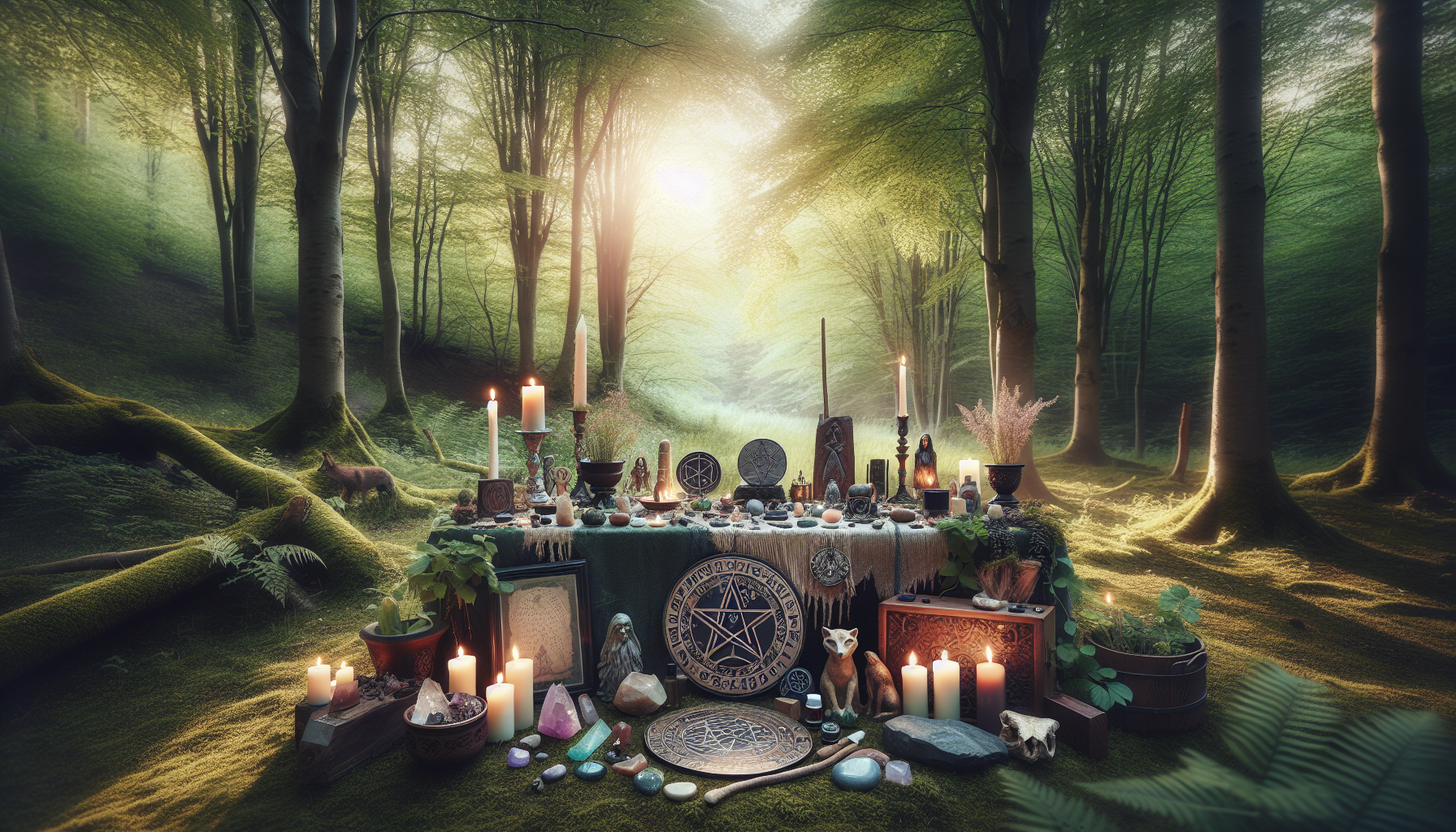
Altar Layout and Design
Creating an altar layout that is both visually appealing and energetically balanced is crucial to cultivating a sacred space that resonates with your beliefs and intentions. The arrangement of altar items and the incorporation of meaningful decorations play a significant role in enhancing the atmosphere and facilitating a deeper connection with your spiritual practice.
"The layout of a pagan altar is like a dance of elements and symbols, harmonizing the energies and intentions you bring to your practice." - Amber Rose, Pagan Practitioner
When designing your altar layout, consider the following methods and principles:
Aesthetic Balance:
Strive for a balanced arrangement of items on your altar, taking into account the size, shape, and color of each element. Arrange items symmetrically or in pleasing asymmetry, whichever feels most harmonious to you.
Elemental Correspondences:
Elemental correspondences can guide the placement of items on your altar, representing the forces of earth, air, fire, water, and spirit. Some practitioners align each element with a specific direction (north, east, south, west, and center), while others arrange them according to personal intuition and spiritual significance.
Intentional Focal Point:
Designate a focal point on your altar that draws attention and holds the essence of your practice. This could be a deity statue, a sacred symbol, or a visually striking item that represents your intention and spiritual path.
Altar Decorations:
Altar decorations play a significant role in infusing your sacred space with personal meaning and aesthetic beauty. These decorations can include flowers, crystals, feathers, candles, incense, artwork, or any other items that resonate with your beliefs and enhance the energy of your altar.
"Altar decorations are like visual poetry, expressing the depth of our spiritual connection through symbolism and beauty." - Luna Moon, Witch and Artist
By incorporating altar decorations that align with your beliefs, you create a space that reflects your unique spiritual path and fosters a sense of sacredness. Experiment with different decorations, finding those that evoke a sense of awe and reverence within you.
Essential Tools for Pagan Rituals
Ceremonial tools are a main focus in any tradition or religion. When it comes to practicing pagan rituals and ceremonies, having the right tools is essential. These ritual tools not only aid in focusing energy but also hold symbolic meanings that enhance your spiritual practice. Let's explore some of the essential tools used in pagan rituals and ceremonies:
Athame
An athame is a ritual knife that is often used in pagan ceremonies. It is typically double-edged and has a black handle. The athame represents the element of Fire and is used to direct energy, cast circles, and invoke or banish entities. When choosing an athame, find one that feels comfortable and balanced in your hand.
Chalice
The chalice is a ceremonial cup or goblet used to hold wine, water, or other sacred liquids. It represents the element of Water and symbolizes the feminine energy. The chalice is often used for libations, sharing offerings, and representing the womb of the Goddess. Choose a chalice that resonates with you, whether it's made of metal, glass, or another material.
Cauldron
A cauldron is a large metal pot or vessel used in pagan rituals. It represents the element of Earth and is associated with transformation, rebirth, and the power of the Goddess. Cauldrons are often used for burning incense, mixing herbs, or performing divination. Look for a cauldron that is sturdy and deep enough for your intended rituals.
Wand
A wand is a long, slender object often made of wood or metal and used to direct energy during rituals. It represents the element of Air and is associated with the masculine energy. Wands are used for casting circles, invoking deities, and amplifying intentions. Find a wand that speaks to you, whether it's handmade or crafted from a specific type of wood.
These are just a few examples of the essential tools used in pagan rituals. It's important to note that the tools you choose should align with your personal beliefs and intentions. Once you've acquired your ritual tools, it's also crucial to consecrate them to enhance their spiritual energy. This can involve cleansing, charging, and dedicating the tools to your craft.
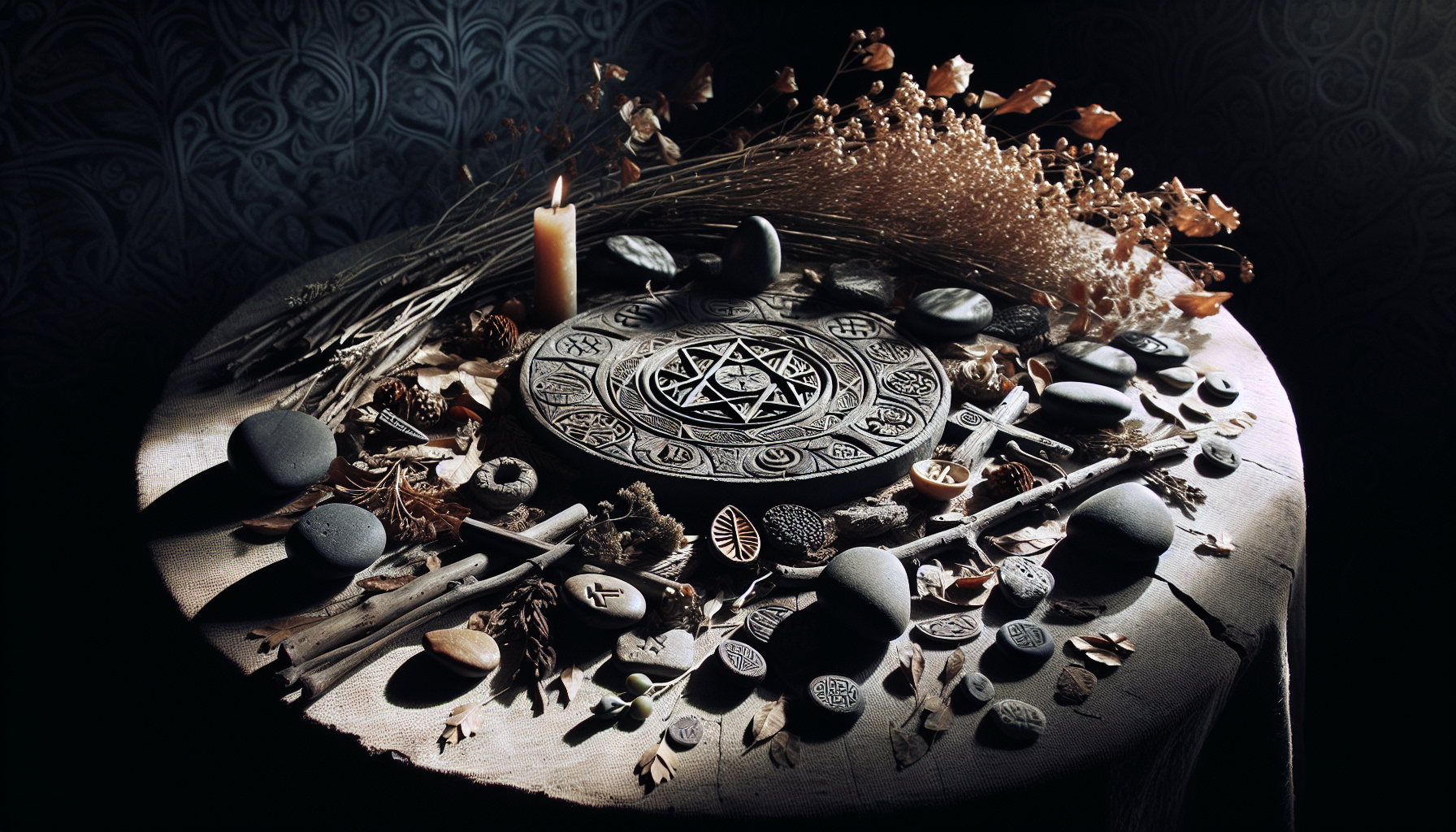
Essential Pagan Ritual Tools
Tool
Athame
Chalice
Cauldron
Wand
Representation
Fire
Water
Earth
Air
Uses
Energy direction, circle casting, invoking/banishing entities
Libations, offerings, representing feminine energy
Incense burning, herb mixing, divination
Energy direction, circle casting, invoking deities
Remember, these tools are meant to assist you in your spiritual practice, but ultimately, the power lies within you. Use them with intention, respect, and reverence, and may they enhance your connection to the divine in your pagan rituals.
Setting Up Elemental Representations on Your Altar
Incorporating elemental representations on your pagan altar is a powerful way to align your practice with the natural forces of the universe. Each element holds its own symbolism and energy, contributing to the overall balance and harmony of your sacred space. (In the video above, I go into detail on the Wiccan altar)
1. Earth:
Representing stability, grounding, and abundance, including earth elements on your altar brings a sense of strength and connection to the physical realm. Consider adding crystals, stones, or soil to symbolize the element of earth.
2. Air:
Air represents intellect, communication, and the breath of life. To incorporate the element of air on your altar, you can include feathers, incense, or even a small fan to symbolize the flowing energy of this element.
3. Fire:
The element of fire symbolizes passion, transformation, and creativity. Candles or a small cauldron with burning incense can represent the fiery energy on your altar, adding warmth and vitality to your sacred space.
4. Water:
Water embodies emotions, intuition, and purification. Including a small bowl of water or a seashell on your altar can represent the element of water, evoking a sense of fluidity and emotional depth.
5. Spirit:
The element of spirit represents the divine essence within all things. While it cannot be physically represented, you can incorporate symbols such as a white candle or a representation of a deity or spiritual guide to honor the spiritual aspect on your altar.
"Incorporating elemental representations on your pagan altar creates a sacred space that is deeply connected to the natural world, inviting the energies of the elements to support your spiritual practice." - [Author Name]
To better understand the symbolism behind each element and how to effectively incorporate them on your altar, refer to the table below:
Element
Earth
Air
Fire
Water
Spirit
Symbolism
Stability, grounding, abundance
Intellect, communication, breath
Passion, transformation, creativity
Emotions, intuition, purification
Divine essence, connection to the divine
Representations
Crystals, stones, soil
Feathers, incense, fan
Candles, cauldron, burning incense
Bowl of water, seashell
White candle, representation of deity or spiritual guide
Sacred Offerings and Symbols
In pagan rituals, the use of sacred offerings and symbols holds deep significance as they serve as conduits for intention, connection, and manifestation. By carefully selecting and utilizing offerings and symbols that resonate with your spiritual path, you can enhance the power and effectiveness of your rituals.
Choosing Sacred Offerings
Offerings are tangible expressions of gratitude, respect, and intentions in pagan rituals. They can be items from the natural world, such as herbs, flowers, or stones, or even personal belongings that hold personal meaning. When selecting offerings, it's important to consider their symbolic significance and their alignment with the purpose of your ritual.
"Sacred offerings are like a conversation between the divine and the practitioner. They serve as physical manifestations of our intentions and gratitude, allowing us to deepen our connection with the spiritual realms," explains Sarah Thompson, a practicing pagan and ritual enthusiast.
For example, if you are performing a ritual to honor the energies of abundance and prosperity, you may choose to offer grains, seeds, or symbols of wealth, such as coins or a green candle.
Utilizing Sacred Symbols
Symbols play a powerful role in pagan rituals, acting as visual representations of specific energies, deities, or intentions. They can be incorporated into ritual tools, altar decorations, or directly used during ceremonies. By understanding the symbolism behind different symbols and choosing those that align with your purpose, you can create a deeper connection with the spiritual forces you are invoking.
Symbols can come in various forms, including runes, sigils, or even specific sacred geometry shapes.
"Symbols speak to our subconscious mind and help us tap into the collective wisdom that has been passed down through generations. They have the power to unlock deeper layers of our spiritual consciousness and amplify the energy of our rituals," says Selena Harris, a pagan and author of "The Power of Symbols in Ritual."
For example, the pentacle, a five-pointed star within a circle, is a widely recognized symbol in pagan practices. It represents the four elements (earth, air, fire, and water) and spirit, and is often used as a protective or grounding symbol during rituals. Other symbols such as the moon, sun, or specific elemental representations can also be incorporated, depending on the intent and focus of your ritual.
By choosing sacred offerings and symbols that hold personal meaning and resonance, you can infuse your pagan rituals with intention, symbolism, and a deeper connection to the spiritual realms.
Honoring Deities and Ancestors on Your Altar
For many pagans, the altar is not just a sacred space but a place to honor specific deities and ancestors. It serves as a focal point for connecting with divine entities and ancestral spirits, fostering a deep sense of reverence and spiritual connection. Creating altars dedicated to specific pantheons and practices allows practitioners to cultivate a stronger bond with their chosen deities and ancestral lineages. However, it is essential to approach this practice with respect and ethical considerations.
When honoring deities on your altar, it is crucial to research and understand their cultural significance and traditional offerings. Respectful engagement involves learning about their stories, associations, symbols, and preferred rituals. Taking the time to immerse yourself in the lore and mythology surrounding your chosen deities will deepen your connection and facilitate a more authentic honoring process.
Similarly, when honoring ancestors, it is vital to approach this practice with sensitivity and care. Researching your ancestral lineage and learning about the customs and traditions of your forebears will provide valuable insights into the appropriate ways to honor them. Incorporate meaningful symbols, photographs, or items that belonged to your ancestors on your altar. Respect their stories, achievements, and struggles by acknowledging and giving gratitude for the legacies they have left behind.
"I honor the gods and my ancestors, drawing strength from their wisdom and guidance. My altar becomes a gateway to the sacred realms, a place where divine and mortal energies meet."
Have questions about strengthening your intuition or building a plan to do so? Get clarity on any concerns you may have.
Examples of Deity and Ancestor Altars
Altar Type
Focus
Placement
Offerings
Decorations
Practices
Deity Altar
Specific deities or pantheons
Centered and prominent
Traditional, research-based
Depictions or symbols of deities
Specific rituals or invocations
Ancestor Altar
Lineage and ancestral spirits
Adjacent to deity altar or separate
Personal and culturally relevant
Photos, heirlooms, or ancestral artifacts
Offerings, storytelling, or genealogical research
Building altars to honor deities and ancestors is a way to establish a tangible connection with the spiritual realms. It allows practitioners to express gratitude, seek guidance, and strengthen their spiritual journeys. By approaching this practice with intention, respect, and genuine understanding, the pagan altar transforms into a sacred space where divine energies converge with mortal existence.
Maintaining and Cleansing Your Altar Space
Proper maintenance and cleansing of your pagan altar space are essential for keeping the energy clear and flowing. By regularly tending to your altar items and performing cleansing rituals, you can ensure the longevity and effectiveness of your sacred space.
Methods for Cleansing and Consecrating Altar Items
To maintain the purity and vibrancy of your altar items, consider incorporating the following cleansing methods:
Salt and Water Cleansing: Mix a small amount of salt in consecrated water and lightly sprinkle or dab it onto your altar items. This combination harnesses the purifying properties of salt and the cleansing energy of water.
Smoke Cleansing: Use sacred herbs such as sage, cedar, or palo santo to create smoke. Pass your altar items through the smoke, allowing it to cleanse and purify their energy.
Moonlight Cleansing: Place your altar items outdoors under the light of the full moon. The moon's energy will cleanse and recharge them, revitalizing their spiritual energy.
Performing Regular Maintenance Rituals
In addition to cleansing rituals, regular maintenance of your altar space ensures its effectiveness and energetic balance. Consider incorporating these practices into your routine:
Dusting and Organizing: Cleanse your altar surface and remove any dust or clutter. A clean and organized space promotes clarity and focus during rituals and practices.
Energizing with Intentions: Set aside time to sit with your altar items, infusing them with your intentions and affirmations. This will reinforce their energetic connection to your sacred space.
Renewal Offerings: Offer fresh herbs, flowers, or incense to your altar on a regular basis. These offerings symbolize gratitude and renewal, maintaining a sense of vibrancy in your sacred space.
By incorporating these maintenance and cleansing practices into your pagan altar routine, you can create a harmonious and energetically-charged space for your rituals and spiritual practices.
Personalizing Your Pagan Altar
Your pagan altar is a reflection of your personal spirituality. It is a sacred space where you can connect with the divine and express your beliefs and intentions. Personalizing your altar allows you to create a space that feels uniquely yours and aligns with your chosen path, whether it be witchcraft, Wicca, or another pagan tradition.
There are various ways to personalize your altar, depending on your preferences and the symbols and practices that resonate with you. Here are some ideas to inspire you:
Dedicate your altar to a specific deity or pantheon
If you have a strong connection to a particular deity or pantheon, you may choose to dedicate your altar to their honor. Incorporate symbols, statues, or images that represent these deities, along with offerings that are meaningful to them. This practice can deepen your connection with the divine and foster a sense of guidance and support.
Use meaningful symbols and objects
Include symbols and objects on your altar that hold deep significance to you. These can be items related to your spiritual practice, such as crystals, herbs, or tarot cards, or personal mementos that remind you of important people or experiences. By incorporating these elements, you infuse your altar with personal energy and create a space that speaks to your heart.
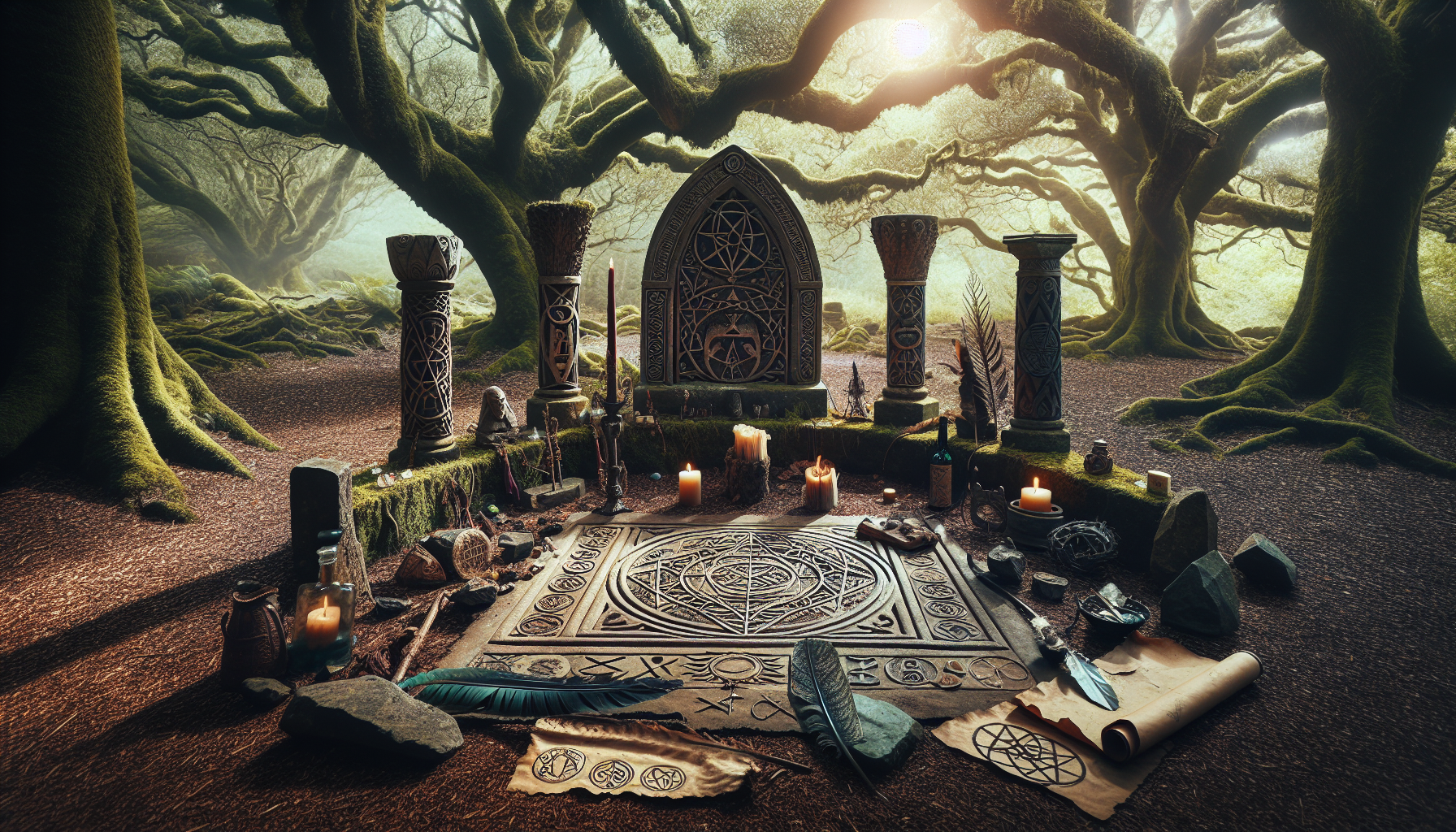
Explore different traditions and practices
Don't be afraid to explore different traditions and practices to find what resonates with you. Whether it's incorporating elements of traditional witchcraft, Wicca, or other pagan paths, there is no right or wrong way to personalize your altar. Take the time to learn about different practices and experiment with what feels authentic and empowering to you.
Remember, personalizing your pagan altar is an ongoing process. As you grow and evolve in your spiritual journey, you may find that your altar evolves with you. Trust your intuition and be open to adapting and refining your sacred space as needed.
"Your altar is a sacred canvas where you can paint the colors of your beliefs and intentions."
Embrace the Power of Your Pagan Altar
As we conclude our journey into the world of pagan altars, it becomes clear that these sacred spaces hold immense significance and power in our spiritual practices. Your pagan altar is more than just an arrangement of symbolic items; it is a gateway to connect with the divine and manifest your intentions.
Embrace the transformative potential of your sacred space, for it holds the energy of your beliefs, your spirituality, and your connection with the natural forces of the universe. It is a place where you can perform rituals, honor deities and ancestors, and seek guidance and wisdom.
With your pagan altar, you have the ability to create a haven of spiritual energy and intention. Feel empowered to infuse your rituals with meaning, connect with the ancient traditions of your path, and manifest your desires through the power of focused intention.
So, whether you follow a specific pagan tradition like Wicca or witchcraft, or forge your own path, remember to honor and nourish your sacred space. The more you engage with your pagan altar, the stronger and more potent its energy becomes. Embrace the power of your pagan altar, and let it be a guiding light on your spiritual journey.

HEY, I’M HAZEL…
I've been a practicing witch since 2001. This site began as a vehicle to share my experiences with witchcraft, and has developed into conversations which link the physical practices of witchcraft with spiritual development. My goal is to connect people with their ability to manifest through developing intuition (divine connection) and the confidence to drive that divine force. Through these videos and resources available on my website, I aim to help those looking for clarity and purpose find it, while also incorporating how to integrate magickal tools such as herbs, spells, crystals, and pagan belief systems to create TRUE spiritual magick.



Get Full Access to All Posts and Resources!